
Full Disclosure: We hate BS as much as you do. This site exists to show you how crypto actually works in the real world. To keep the lights on, some links in our articles are affiliate links. If you use them, we may earn a small commission at zero extra cost to you. We only recommend platforms we personally use and trust with our own stablecoins.
Two-Thirds of All Stablecoins Live in the Developing World
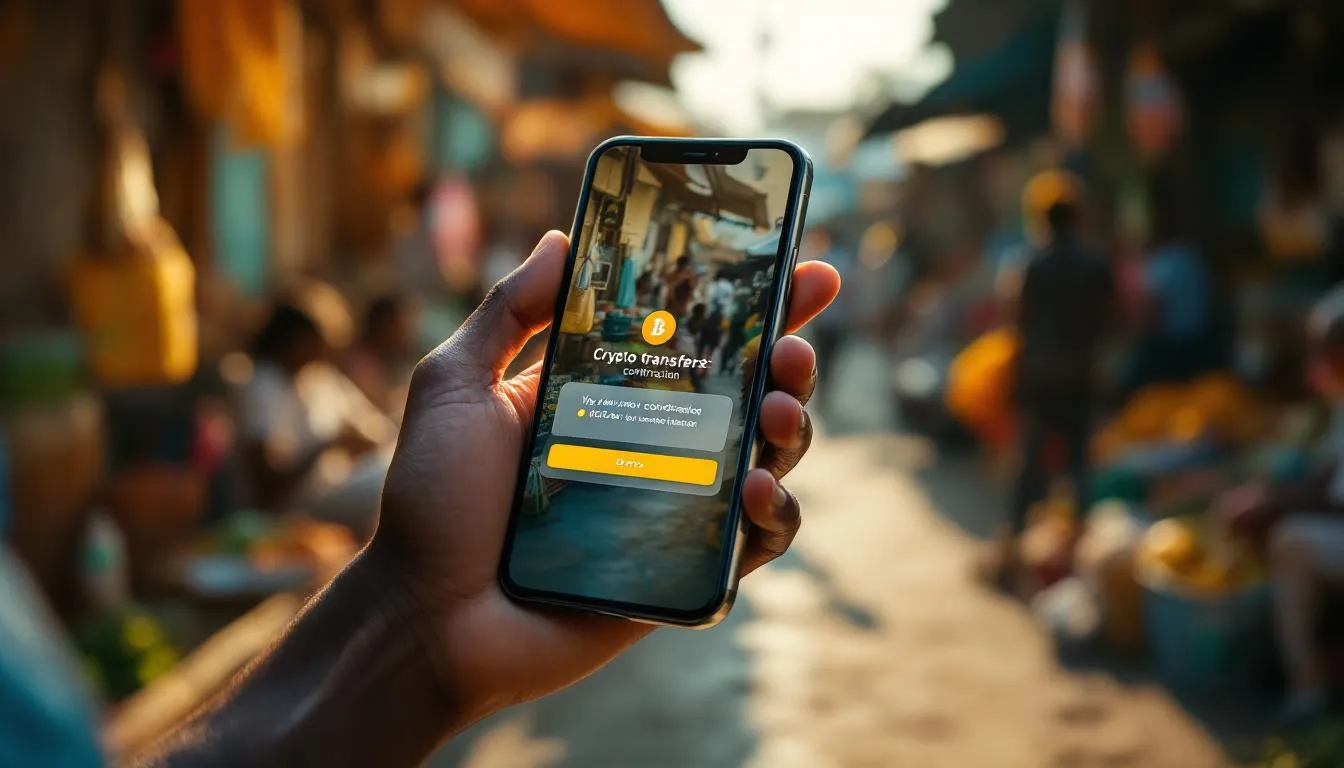
Goldman Sachs published a research report in early 2026 with a number that should reframe every conversation about stablecoins: 66% of total stablecoin supply is held in emerging markets.
That's roughly $70 billion in dollar-pegged tokens sitting in wallets across Nigeria, Turkey, Argentina, Kenya, the Philippines, Venezuela, and dozens of other countries where the local currency is unreliable, banks are inaccessible, or capital controls make it hard to hold dollars through official channels.
Goldman's projection: this could grow to $250 billion to $730 billion over the coming years, depending on regulatory adoption and infrastructure development. The low end assumes modest growth. The high end assumes stablecoins become the default dollar-access tool in most developing economies.
S&P Global Ratings published a companion analysis covering 45 emerging markets, examining what foreign currency stablecoin adoption means for local banking systems, monetary policy, and financial stability. Their conclusion isn't optimistic for central bankers: stablecoins are accelerating dollarization in countries that have spent decades trying to prevent it.
This isn't crypto people talking about crypto. This is Goldman Sachs and S&P, institutions that manage trillions, telling their clients that stablecoins have already replaced traditional banking for a significant chunk of the developing world.
Why People in Lagos Don't Care About the GENIUS Act
In the United States, the stablecoin conversation is about regulation. GENIUS Act compliance. FDIC rules. Whether Circle or Tether is more transparent. Who gets a banking charter.
In Lagos, the conversation is different. It's about whether your money will still be worth the same amount next week.
Nigeria's naira lost over 70% of its value against the dollar between 2023 and 2025. The Central Bank of Nigeria tried to fix the exchange rate, then floated it, then tried to control it again. Capital controls make it nearly impossible for ordinary Nigerians to buy dollars through official banking channels. The official rate and the parallel market rate diverge by 20-40% on any given day.
For a freelancer earning in dollars from Upwork or Fiverr, converting those earnings to naira through a bank means accepting the official rate and losing 20-40% immediately. Converting to USDT through P2P means getting close to the parallel market rate. The math isn't complicated. It's survival math.
We track the actual costs of buying USDT in Nigeria on our Nigeria cost page. The P2P premiums fluctuate, but they're consistently cheaper than the spread you'd lose converting through a bank.
This pattern repeats across dozens of countries. The details change. The math doesn't.
Country by Country: Where Stablecoins Are the Dollar
Turkey. The lira has lost over 80% of its purchasing power since 2021. Annual inflation peaked above 85% in 2022 and remained above 60% through 2024. Turkish residents can't easily open dollar bank accounts due to regulatory restrictions. USDT on P2P platforms has become the de facto savings tool for anyone who doesn't trust the lira. Turkey consistently ranks in the top 5 countries for crypto transaction volume. Check current costs on our Turkey page.
Argentina. Capital controls ("cepo cambiario") limit official dollar purchases. The "blue dollar" street rate runs 30-50% above the official exchange rate. Stablecoins offer a way to hold dollars without violating capital controls, because buying USDT on a crypto exchange technically isn't buying foreign currency under Argentine regulations. It's buying a digital asset. The legal arbitrage is well-understood, and millions of Argentines use it. See our Argentina cost breakdown.
Kenya. Mobile money (M-Pesa) is everywhere, but dollar access is limited. OKX and Binance P2P have strong liquidity in Kenyan shillings. Freelancers and small businesses use stablecoins to receive international payments without the 3-5 day settlement and 6-7% fees of traditional remittance services. Cross-border B2B payments between East African countries increasingly settle in USDT rather than going through correspondent banks.
Philippines. Over $37 billion in remittances flow into the Philippines annually. Traditional channels charge 5-8% in fees. A Filipino worker in Dubai sending money home through USDT on Tron pays under $1 in fees and the recipient gets it in minutes, not days. Stablecoin remittances aren't replacing the entire $37 billion yet. But they're growing fast, especially among younger workers who already have crypto wallets.
Venezuela. Hyperinflation destroyed the bolivar. Dollars became the unofficial currency but physical dollar bills are hard to come by and wear out fast in circulation. USDT became the digital dollar. Merchants in Caracas accept USDT payments through mobile wallets. It's not a crypto experiment. It's the economy.
The Three Drivers Goldman Identified
Goldman Sachs' report identifies three forces pushing stablecoin adoption in emerging markets. None of them are speculation.
1. Wealth protection. When your local currency loses 20-80% of its value in a few years, holding dollars isn't an investment strategy. It's preservation. Stablecoins give people in volatile economies access to dollar stability without needing a US bank account, a relationship with a foreign exchange broker, or approval from a central bank that doesn't want you holding dollars.
2. Remittances. The World Bank estimates average remittance fees at 6-7% globally. For a migrant worker sending $500 home, that's $30-35 in fees plus 3-5 business days of waiting. USDT on Tron costs roughly $1 and settles in under a minute. Even accounting for P2P conversion fees on both ends, stablecoins are 50-80% cheaper than Western Union for most corridors.
3. Weak local currencies. This is related to wealth protection but distinct. When a currency is actively depreciating, businesses face constant pricing instability. A Turkish shopkeeper who buys inventory in dollars (because imports are priced in dollars) but sells in lira faces margin erosion every single day. Some have started pricing in USDT or converting daily lira revenue to USDT each evening. It's unofficial dollarization happening from the bottom up, without any government policy enabling it.
Eduardo Levy Yeyati, writing for Project Syndicate, frames this as a threat to emerging economies. Stablecoins aren't just payment tools anymore. They're becoming "full-fledged financial infrastructure for payments, payroll, corporate cash management, and cross-border settlement." When that infrastructure runs on US dollars instead of the local currency, central banks lose control of monetary policy.
The S&P Warning: 45 Markets at Risk of Stablecoin Dollarization
S&P Global Ratings analyzed 45 emerging markets to assess what growing stablecoin adoption means for financial stability. Their conclusions are worth reading carefully if you live in one of those markets.
The core risk is deposit displacement. When citizens move savings from local bank deposits to USDT or USDC, banks lose funding. Less funding means less lending. Less lending means slower economic growth. For countries where bank credit is already scarce, this creates a negative spiral.
S&P's scenario analysis models different levels of stablecoin adoption and maps their impact on banking system stability. In markets where 10-20% of deposits shift to stablecoins, the effect on bank lending capacity is significant enough to trigger rating downgrades for local financial institutions.
The irony is thick. The same conditions that make stablecoins attractive (currency instability, capital controls, weak banking infrastructure) are the conditions that make stablecoin adoption most destructive to local financial systems. People flee to dollars because the lira or naira is unreliable. That flight makes the lira or naira more unreliable. Which makes more people flee to dollars.
Central banks in emerging markets are stuck. Banning crypto outright (as Nigeria tried in 2021) just pushes trading to P2P platforms and VPNs. Allowing it accelerates dollarization. The middle path is creating viable local digital currencies or CBDCs, but most CBDC projects are years behind stablecoin adoption curves.
What This Means for You
If you're in an emerging market reading this, you probably already know everything in this article from lived experience. You're holding USDT because your salary loses value sitting in a bank account. You're using P2P because your bank won't let you buy dollars. You're sending money to family through crypto because Western Union takes 7% and three days.
The Goldman and S&P reports validate what millions of people in developing countries figured out on their own: stablecoins are the dollar account your bank won't give you.
If you're in a developed market, the implications are different but equally important. The $70 billion in emerging market stablecoin holdings creates real demand for USDT and USDC that has nothing to do with crypto speculation. This demand is structural. It grows when local currencies weaken. It doesn't disappear during crypto bear markets. It's the floor under stablecoin adoption.
Goldman's $730 billion high-end projection would make stablecoins roughly the size of Mexico's GDP. Even the conservative $250 billion estimate would make stablecoins one of the largest stores of dollar value outside the US banking system. Either number changes the calculus for every regulator, every bank, and every payment company on the planet.
The dollar's dominance has always depended on people around the world wanting to hold dollars. Stablecoins just made it dramatically easier for 4 billion people in emerging markets to actually do it.
- Nigeria — P2P premiums, naira rates, exchange options
- Turkey — lira conversion costs, P2P liquidity
- Argentina — blue dollar rates, capital control workarounds
- All 80+ Countries — full cost calculator
- Real Stories: Stablecoins in Emerging Markets — firsthand accounts from Nigeria, Argentina, Turkey
- FDIC GENIUS Act Rules — how US regulation affects global stablecoin access
- USDT vs USDC Comparison — which stablecoin to hold
This content is for informational purposes only and does not constitute financial advice. Always do your own research before making investment decisions.

Mark Snowden
Former TradFi analyst turned full-time stablecoin researcher. We only recommend platforms we personally use.
Ready to get started?
Check our complete guide to buying stablecoins: real costs, real platforms, no fluff.