
Full Disclosure: We hate BS as much as you do. This site exists to show you how crypto actually works in the real world. To keep the lights on, some links in our articles are affiliate links. If you use them, we may earn a small commission at zero extra cost to you. We only recommend platforms we personally use and trust with our own stablecoins.
He Made $85 Million in One Night. I Wanted In.
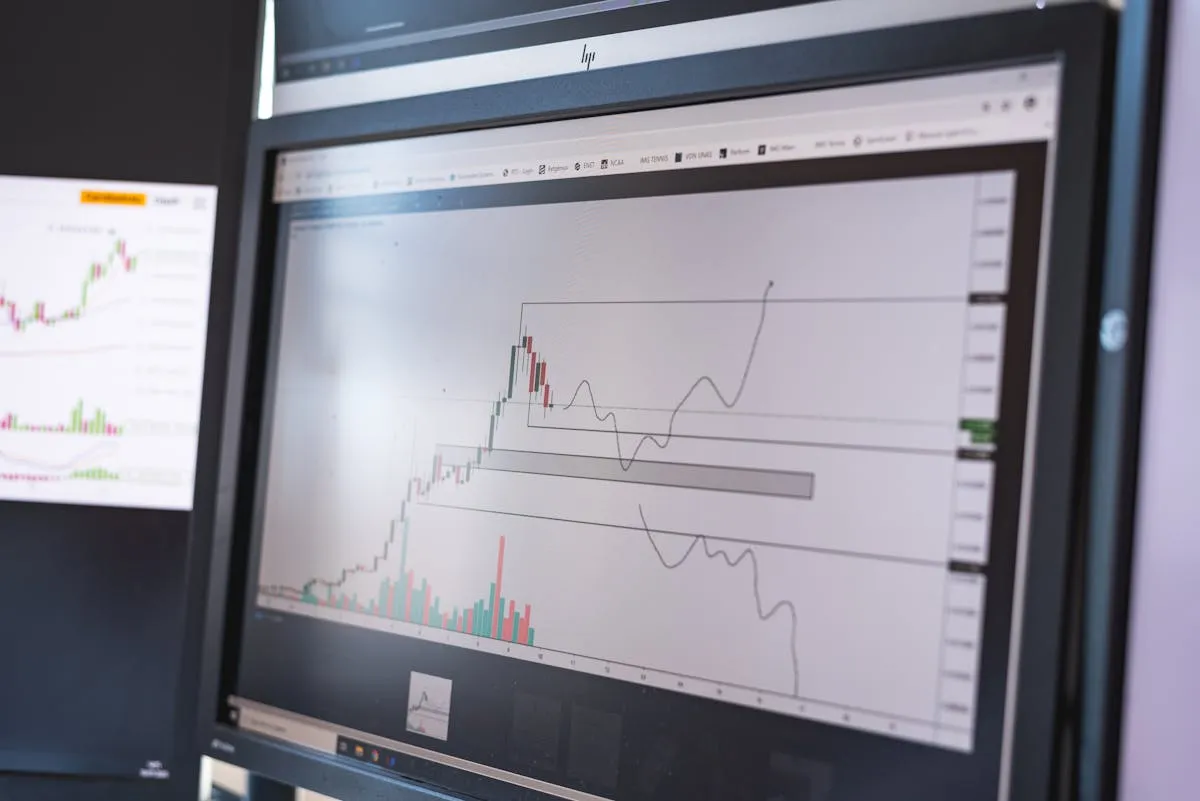 November 5, 2024. Election night. A French ex-Wall Street trader named Théo had placed over $30 million across 11 Polymarket accounts betting Trump would win. By the time the results came in, he'd made $85 million. In a single night.
That number did something to my brain. Not because $85 million is life-changing money — it's absurd money. But because the mechanism was so clean. He didn't hack anything. He didn't insider trade. He read the political landscape better than every poll, every pundit, every cable news network — and he got paid for being right.
Polymarket predicted Trump would win at 58% the Monday before the election, while polls showed a dead heat. It correctly called 6 out of 7 swing states. $3.3 billion in volume on the presidential race alone — 6x more than all 2020 election betting combined.
I thought: this is the most honest market in the world. No market makers deciding your fill price. No exchange manipulating liquidations. Just probability, priced in real time by people with skin in the game. I wanted to understand it. I wanted to find my edge.
So I went in. I studied the leaderboard traders. I tracked arbitrage opportunities. I tested the copy-trading bots everyone on Twitter was hyping. I spent weeks inside this ecosystem.
What I found killed every bit of excitement I had.
November 5, 2024. Election night. A French ex-Wall Street trader named Théo had placed over $30 million across 11 Polymarket accounts betting Trump would win. By the time the results came in, he'd made $85 million. In a single night.
That number did something to my brain. Not because $85 million is life-changing money — it's absurd money. But because the mechanism was so clean. He didn't hack anything. He didn't insider trade. He read the political landscape better than every poll, every pundit, every cable news network — and he got paid for being right.
Polymarket predicted Trump would win at 58% the Monday before the election, while polls showed a dead heat. It correctly called 6 out of 7 swing states. $3.3 billion in volume on the presidential race alone — 6x more than all 2020 election betting combined.
I thought: this is the most honest market in the world. No market makers deciding your fill price. No exchange manipulating liquidations. Just probability, priced in real time by people with skin in the game. I wanted to understand it. I wanted to find my edge.
So I went in. I studied the leaderboard traders. I tracked arbitrage opportunities. I tested the copy-trading bots everyone on Twitter was hyping. I spent weeks inside this ecosystem.
What I found killed every bit of excitement I had.I'll Give It Credit: As a News Tool, Nothing Comes Close
Before I tear this apart — and I will — I need to be honest: prediction markets changed how I consume news. And I mean that.
I check Polymarket every morning now. Not to trade. To read.
When CNN says "Iran tensions are escalating" — that's a headline designed to keep you watching. When Polymarket prices "U.S. strike on Iran by Friday" at 73%, that's a number with millions of dollars behind it. Real money, from real people, who lose real money if they're wrong. That is a fundamentally different kind of information.
The 2024 election proved it works. By September, Polymarket data showed Trump winning Arizona, North Carolina, Georgia, Nevada, and Pennsylvania — months before polls caught up. Accuracy improves sharply as resolution approaches — roughly 90% a month out, higher in the final days. Compare that to political analysts getting paid six figures to be wrong on TV.
The mechanism is elegant: each outcome trades between $0 and $1. YES at $0.65 means the crowd prices it at 65% probability. Buy YES, and if you're right, you get $1 back. If wrong, you lose your $0.65. Incorrect prices create profit opportunities that pull the market toward truth. It's crowd-sourced reality, weighted by money.
For Fed rate decisions, for geopolitical risk, for election tracking — prediction markets are the single best real-time information tool I've ever used. If you want to see what's out there, we put together a comparison of every major prediction market platform — Polymarket, Kalshi, Drift, Azuro, and Manifold.
But here's where my admiration ends. Because "amazing information tool" and "place where you can make money" are two completely different sentences. And the data on the second one destroyed me.
Then I Looked at the Data. 70% Lose. 0.04% Take Everything.
 I thought I could be one of the smart ones. Then I pulled the actual numbers.
Blockchain analyst defioasis analyzed every single one of 1.7 million Polymarket addresses. Here's what the data says:
70% of all addresses have realized net losses. That's 1.1 million wallets in the red. Not "underperformed." Not "broke even." Lost money.
Of the 30% that are profitable? Most of them barely made anything. 63.5% of winning addresses earned between $0 and $1,000 — capturing a combined 0.86% of total profits. Making more than $1,000 puts you in the top 4.9%.
And the top? Fewer than 0.04% of addresses captured over 70% of all realized profits — totaling $3.7 billion.
Read that again. 0.04%. Not 4%. Not 0.4%. Zero point zero four percent.
That's not a market where skilled traders outperform. That's a machine that moves money from 1.1 million retail wallets into a few hundred sophisticated ones. Finance Magnates called prediction market traders "capital donors." I can't think of a more accurate term.
CFD brokers in Europe are legally required to show warnings like "76% of retail accounts lose money." Polymarket has no such warning. Its homepage shows Théo's $85 million win. It does not show the 1.1 million addresses that paid for it.
And here's what finally broke me: 14 out of the 20 most profitable Polymarket traders are bots. I'm not competing against another human who reads the news and makes a judgment. I'm competing against algorithms that execute in milliseconds, running 24/7, with professional-grade infrastructure and six-figure development budgets.
I don't have that. You don't either.
I thought I could be one of the smart ones. Then I pulled the actual numbers.
Blockchain analyst defioasis analyzed every single one of 1.7 million Polymarket addresses. Here's what the data says:
70% of all addresses have realized net losses. That's 1.1 million wallets in the red. Not "underperformed." Not "broke even." Lost money.
Of the 30% that are profitable? Most of them barely made anything. 63.5% of winning addresses earned between $0 and $1,000 — capturing a combined 0.86% of total profits. Making more than $1,000 puts you in the top 4.9%.
And the top? Fewer than 0.04% of addresses captured over 70% of all realized profits — totaling $3.7 billion.
Read that again. 0.04%. Not 4%. Not 0.4%. Zero point zero four percent.
That's not a market where skilled traders outperform. That's a machine that moves money from 1.1 million retail wallets into a few hundred sophisticated ones. Finance Magnates called prediction market traders "capital donors." I can't think of a more accurate term.
CFD brokers in Europe are legally required to show warnings like "76% of retail accounts lose money." Polymarket has no such warning. Its homepage shows Théo's $85 million win. It does not show the 1.1 million addresses that paid for it.
And here's what finally broke me: 14 out of the 20 most profitable Polymarket traders are bots. I'm not competing against another human who reads the news and makes a judgment. I'm competing against algorithms that execute in milliseconds, running 24/7, with professional-grade infrastructure and six-figure development budgets.
I don't have that. You don't either.I Tried the Arbitrage Angle. Here's What Actually Works — And What's Amateur Hour.
Okay, so direct trading is a losing game for retail. What about arbitrage? That's where the math nerds go — and at first, I was impressed.
The concept is clean: buy YES on one platform, NO on another. If the combined cost is under $1.00, you profit no matter what happens. Researchers at IMDEA Networks Institute found $40 million was extracted through cross-platform arbitrage between April 2024 and April 2025. Real money. Real profits.
But it wasn't people like me collecting it. Not even close:
Problem 1: The platforms don't agree on what happened. During the 2024 U.S. government shutdown, Polymarket's settlement standard was "OPM issues a closure notice." Kalshi required "actual closure exceeding 24 hours." Traders who bought "riskless" hedged positions on both platforms lost on both sides. The same event, two different outcomes, both pockets emptied.
Problem 2: Speed. Spreads compressed from 4.5% in 2023 to 1.2% in 2025. By the time I opened two browser tabs, the edge was gone. Bots eat these opportunities in seconds.
Problem 3: Fees ate my lunch. Polymarket's taker fees hit 0.1-0.2% in early 2026. Kalshi charges ~1.2% per contract. A 1% gross edge becomes negative after fees.
Now here's where I need to be blunt — and this is the one thing I wish someone had told me earlier.
Everyone on Twitter talks about "using Vegas odds" to find prediction market edges. That tells me they understand neither market.
Vegas sportsbooks are soft books. They run 5-7% margins. They limit winning bettors. They adjust lines to balance their own liability — not to find truth. Their odds are a commercial product designed to extract money from recreational gamblers. Comparing Vegas odds to Polymarket odds is comparing two inaccurate numbers and calling the gap an "edge."
The real benchmark — the one professional bettors worldwide actually use — is Pinnacle. And unless you've spent time in the sports betting world, you've probably never heard of it.
Pinnacle operates on 2-3% margins. It accepts unlimited sharp money. It never bans winning bettors — because winning bettors make its lines more accurate. A study of 397,935 football matches found Pinnacle's closing lines fit actual outcomes with an r² of 0.997 — meaning the lines explain virtually all the variance in real results. Professional bettors worldwide treat Pinnacle closing odds as the single sharpest benchmark available.
The real edge — the only one I've seen that holds up — is Pinnacle's de-vigged pre-match lines versus prediction market prices. Polymarket sports prices are set by crypto-native retail traders guessing. Pinnacle lines are set by the combined action of every professional sports bettor on earth. When those two prices diverge on the same event, the Pinnacle price is almost always closer to reality.
That's an edge. Everything else I've seen is noise.
I Tested the Leaderboard "Gurus." This Is Where I Got Angry.
 This is the part that changed everything for me. Not disappointed — angry.
I went through the leaderboard accounts one by one. Beautiful PnL curves. 80%+ win rates. Accounts turning $5K into $50K in weeks. Twitter was full of people screenshotting these wallets: "Just copy this guy. Free money."
So I did what nobody on Twitter seems to do. Using public on-chain data and platform APIs, I tracked what these accounts actually trade. Not the PnL. The positions. The markets. The timing. The associated wallets taking the other side.
The same pattern. Over and over.
Step 1: The "guru" picks a market nobody's watching. Not "Will Trump win?" — that's got millions in volume and efficient pricing. Something like Lakers vs. Spurs, Q4 total points over 48.5. Thin order book. Maybe $2,000 in total liquidity. Nobody cares about this market.
Step 2: The guru uses multiple alt accounts to load up on NO. This drains the YES side and pushes the YES price artificially low. The true fair value might be $0.50. But after the alt accounts buy all the cheap NO, the available YES price drops to $0.35.
Step 3: The main account — the one on the leaderboard, the one with the beautiful track record — buys YES at $0.35.
Step 4: Add it up. Across all accounts, the guru now holds YES ($0.35) and NO ($0.55). Total cost: $0.90. No matter what happens — Lakers score 50 or 40 — one side pays $1.00. That's $0.10 guaranteed profit per contract. Zero risk.
The leaderboard only shows the main account. And what does that account show? A genius who bought YES at $0.35 and collected $1.00. What a trader. What a mind.
Now here's where it becomes theft.
You see this guru's record. You set up a copy-trading bot — there are dozens on Telegram, all promising to follow the "smartest wallets." The guru enters another obscure market. Your bot follows. But you don't get in at $0.35. That price only existed because the guru's own alt accounts manufactured it. You buy at the real market price. $0.52. $0.55. Maybe $0.60.
The guru's total cost across all wallets is $0.90 for a guaranteed $1.00. Yours is $0.55 for a coin flip.
They're selling you something worth $0.50 for $0.70. And the leaderboard is the showroom.
Your risk exposure is their profit margin. Every dollar you lose is a dollar they guaranteed themselves before you even clicked "follow." You are not a copy trader. You are the exit liquidity. You are the crop being farmed.
Based on public wallet data and observed market mechanics, this pattern repeated across every suspicious leaderboard account I checked. Low-liquidity markets. Multi-account coordination. Perfect win rates that only exist because the other side of the trade is also theirs.
Independent analysis confirms this isn't anecdotal. A review of 847 tracked leaderboard wallets found 30-40 showing patterns "strongly suggestive of automation and multi-account coordination." Perfect curves with no losses. Trades exclusively in low-liquidity markets. Associated wallets always on the other side.
After I saw this, I deleted every copy-trading bot I'd installed. And I haven't recommended one since.
This is the part that changed everything for me. Not disappointed — angry.
I went through the leaderboard accounts one by one. Beautiful PnL curves. 80%+ win rates. Accounts turning $5K into $50K in weeks. Twitter was full of people screenshotting these wallets: "Just copy this guy. Free money."
So I did what nobody on Twitter seems to do. Using public on-chain data and platform APIs, I tracked what these accounts actually trade. Not the PnL. The positions. The markets. The timing. The associated wallets taking the other side.
The same pattern. Over and over.
Step 1: The "guru" picks a market nobody's watching. Not "Will Trump win?" — that's got millions in volume and efficient pricing. Something like Lakers vs. Spurs, Q4 total points over 48.5. Thin order book. Maybe $2,000 in total liquidity. Nobody cares about this market.
Step 2: The guru uses multiple alt accounts to load up on NO. This drains the YES side and pushes the YES price artificially low. The true fair value might be $0.50. But after the alt accounts buy all the cheap NO, the available YES price drops to $0.35.
Step 3: The main account — the one on the leaderboard, the one with the beautiful track record — buys YES at $0.35.
Step 4: Add it up. Across all accounts, the guru now holds YES ($0.35) and NO ($0.55). Total cost: $0.90. No matter what happens — Lakers score 50 or 40 — one side pays $1.00. That's $0.10 guaranteed profit per contract. Zero risk.
The leaderboard only shows the main account. And what does that account show? A genius who bought YES at $0.35 and collected $1.00. What a trader. What a mind.
Now here's where it becomes theft.
You see this guru's record. You set up a copy-trading bot — there are dozens on Telegram, all promising to follow the "smartest wallets." The guru enters another obscure market. Your bot follows. But you don't get in at $0.35. That price only existed because the guru's own alt accounts manufactured it. You buy at the real market price. $0.52. $0.55. Maybe $0.60.
The guru's total cost across all wallets is $0.90 for a guaranteed $1.00. Yours is $0.55 for a coin flip.
They're selling you something worth $0.50 for $0.70. And the leaderboard is the showroom.
Your risk exposure is their profit margin. Every dollar you lose is a dollar they guaranteed themselves before you even clicked "follow." You are not a copy trader. You are the exit liquidity. You are the crop being farmed.
Based on public wallet data and observed market mechanics, this pattern repeated across every suspicious leaderboard account I checked. Low-liquidity markets. Multi-account coordination. Perfect win rates that only exist because the other side of the trade is also theirs.
Independent analysis confirms this isn't anecdotal. A review of 847 tracked leaderboard wallets found 30-40 showing patterns "strongly suggestive of automation and multi-account coordination." Perfect curves with no losses. Trades exclusively in low-liquidity markets. Associated wallets always on the other side.
After I saw this, I deleted every copy-trading bot I'd installed. And I haven't recommended one since.25% of All Volume Is Fake
In November 2025, researchers at Columbia Business School published a paper titled "Network-Based Detection of Wash Trading" on SSRN. The authors — Yash Kanoria, Hongyao Ma (business school professors), Rajiv Sethi (economics professor at Barnard College), and Allen Sirolly (doctoral student) — analyzed Polymarket's entire on-chain trading history on the Polygon blockchain.
Their finding: approximately 25% of all Polymarket trading volume is wash trading — users rapidly buying and selling the same contracts, often to themselves or colluding accounts, to inflate activity metrics.
The paper hasn't undergone peer review yet, but the methodology is rigorous: they developed a network-based algorithm that identifies clusters of wallets trading almost exclusively with each other, forming closed loops that rarely transact with other market participants.
Key data points from the study:
Peak manipulation: In December 2024, wash trading accounted for nearly 60% of weekly volume. Some weeks, over 90% of trades in election and sports markets were flagged as suspicious.
Scale: The algorithm detected complex networks involving tens of thousands of accounts, not just simple back-and-forth trades between two wallets.
Motivation: Many suspected wash trading wallets made no real profits. The researchers believe the goal was gaming future incentives — potential token airdrops or platform rankings — rather than trading profits.
Why it's possible: Polymarket requires no identity verification and (until early 2026) charged no trading fees. Creating thousands of wallets and trading between them cost virtually nothing.
The study was covered by CoinDesk, Bloomberg, and Fortune. Polymarket hasn't issued a public rebuttal.
When a quarter of the volume on a platform is fake, every other metric — liquidity, market depth, price discovery efficiency — is suspect.
Someone Made $553,000 From an Assassination. And That's Not Even the Worst Part.
I kept digging. And the deeper I went, the worse it got. These aren't hypothetical risks. They already happened.
$7 million stolen through a governance vote. In March 2025, a whale with 5 million UMA governance tokens — 25% of total voting power — used three accounts to force a false result on a $7 million market. The question was whether Ukraine would agree to a mineral deal with Trump. The market had been trading at 9%. The whale just... voted YES. Ukraine never signed anything. But the market resolved as YES. Polymarket's official response: "Unfortunately, because this wasn't a market failure, we are not able to issue refunds." Seven million dollars. Wrong outcome. No recourse.
Let that sink in. The platform's settlement mechanism can be bought. And when it was, the platform shrugged.
$553,000 from a world leader's death. On February 28, 2026, an account called "Magamyman" placed a $32,000 bet that there would be strikes on Iran that day. The market said 17% chance. Hours later, Israeli strikes killed Khamenei. Payout: over $553,000. In the hours before the attack, over 150 accounts placed four-figure bets totaling $855,000, all correctly predicting strikes, according to a New York Times analysis. Senator Chris Murphy called it "insider trading in broad daylight."
Think about what this means. Someone — possibly with access to intelligence about a military strike — used that knowledge to make half a million dollars on a prediction market. And because Polymarket has no KYC and operates offshore, enforcement is fragmented and far weaker than on regulated venues like Kalshi, where the CFTC has at least managed to act on insider trading cases.
$847,000 wagered on nuclear war. In March 2026, Polymarket hosted a market: "Nuclear weapon detonation by [date]?" People were betting on whether a nuclear bomb would go off — on the same interface they use for NBA games. $847,000 in volume before public outrage forced its removal.
And on the regulated side, it's not much better. The CFTC has sanctioned insiders on Kalshi — including a content creator's editor who used non-public information to trade, and a political candidate who bet on his own election. These are the cases that got caught on a regulated platform with KYC. On an unregulated, pseudonymous one? We don't know what we don't know.
"I Vibecoded a Bot That Prints Money." No, You Didn't.
 My Twitter timeline in early 2026 looked like this: every third tweet was a thread about someone who used Claude or GPT to build a Polymarket bot, dropped out of college, and turned $20 into five figures. The screenshots were perfect. The engagement was massive. The replies were all fire emojis.
I almost believed it. For about thirty seconds.
The CFTC's customer advisory says it better than I can: "Fraudsters are exploiting public interest in AI to tout automated trading algorithms that promise unreasonably high or guaranteed returns. AI technology can't predict the future or sudden market changes." In 2024, Americans lost $5.7 billion to investment scams. By 2025, over 50% of financial frauds used AI tools.
But forget the scammers. Even the legitimate experiments fail. Bankless tested predictive AI agents on Polymarket. Infinite Games' agent Aeon: lost money. Taoshi's signals: made money briefly, then reversed into losses. One experimenter put in $250 and ended with $2.43. Two dollars and forty-three cents.
This will never work for you or me, and the reason is stupidly simple: AI can only process public information. Prediction market prices already reflect public information. By the time your weekend vibecoded bot reads a headline and places a trade, the price has already moved. The 14 out of 20 top Polymarket earners that are bots? They're running on dedicated servers, millisecond execution, proprietary data feeds, and six-figure development budgets. Your Claude-generated Python script isn't competing with them. It's donating to them.
The college-dropout-to-crypto-millionaire story has been recycled since 2017. The medium changes — ICOs, DeFi farming, NFTs, memecoins, and now prediction market bots. The mechanics never change: a few people make money early, then sell the dream to thousands who arrive late.
You are not the protagonist of these Twitter threads. You are the audience they need to exist.
My Twitter timeline in early 2026 looked like this: every third tweet was a thread about someone who used Claude or GPT to build a Polymarket bot, dropped out of college, and turned $20 into five figures. The screenshots were perfect. The engagement was massive. The replies were all fire emojis.
I almost believed it. For about thirty seconds.
The CFTC's customer advisory says it better than I can: "Fraudsters are exploiting public interest in AI to tout automated trading algorithms that promise unreasonably high or guaranteed returns. AI technology can't predict the future or sudden market changes." In 2024, Americans lost $5.7 billion to investment scams. By 2025, over 50% of financial frauds used AI tools.
But forget the scammers. Even the legitimate experiments fail. Bankless tested predictive AI agents on Polymarket. Infinite Games' agent Aeon: lost money. Taoshi's signals: made money briefly, then reversed into losses. One experimenter put in $250 and ended with $2.43. Two dollars and forty-three cents.
This will never work for you or me, and the reason is stupidly simple: AI can only process public information. Prediction market prices already reflect public information. By the time your weekend vibecoded bot reads a headline and places a trade, the price has already moved. The 14 out of 20 top Polymarket earners that are bots? They're running on dedicated servers, millisecond execution, proprietary data feeds, and six-figure development budgets. Your Claude-generated Python script isn't competing with them. It's donating to them.
The college-dropout-to-crypto-millionaire story has been recycled since 2017. The medium changes — ICOs, DeFi farming, NFTs, memecoins, and now prediction market bots. The mechanics never change: a few people make money early, then sell the dream to thousands who arrive late.
You are not the protagonist of these Twitter threads. You are the audience they need to exist.So Why Do I Still Open Polymarket Every Morning?
After all of this — after the data, the leaderboard scam, the fake volume, the insider assassination bets — I still check Polymarket every single day.
Not to trade. To think.
Here's what changed for me: I stopped seeing prediction markets as a place to make money and started seeing them as the best news dashboard ever built.
When CNN says "tensions are escalating" — that's a headline designed to keep me watching. When Polymarket prices "U.S. strike on Iran by Friday" at 73%, that's a number backed by millions of dollars from people who lose real money if they're wrong. One is entertainment. The other is information.
I use it for Fed rate decisions. Before every FOMC meeting, Polymarket and Kalshi give me cleaner probabilities than CME FedWatch. I use it for elections — 2024 proved it's more accurate than polls. I use it for geopolitical risk — sanctions, trade deals, conflicts — because no news outlet gives you a continuously updated probability the way a prediction market does.
If you're making business decisions, investment decisions, or even just trying to understand the world better — prediction market prices are a genuinely valuable input.
What I don't use them for: making money. 70% of users lose. 0.04% take everything. The copy-trading ecosystem exists to extract money from followers. The vibecoding fantasy is exactly that — a fantasy.
If you want real yield on your stablecoins, there are boring, transparent, auditable ways: DeFi lending with verifiable rates. Staking with on-chain rewards. Tokenized Treasuries earning the risk-free rate. None promise 10x returns. All have better expected value than betting on prediction markets.
The Bottom Line: Read It. Don't Trade It.
I started this journey because a French trader made $85 million in one night and I thought I could find my own version of that edge.
I didn't find an edge. I found a system where 70% of participants fund the other 30%, where 25% of the volume is fake, where leaderboard "gurus" sell you a $0.50 coin flip for $0.70, where a whale can buy $7 million worth of governance tokens and rewrite reality, and where someone can profit half a million dollars from advance knowledge of an assassination — and nobody can do anything about it.
The innovation is real. I mean that. Prediction markets as an information aggregation tool are one of the most important inventions in finance since the index fund. They told us Trump would win when every poll said it was a toss-up. That's worth something.
But the innovation and the exploitation live in the same building. Same platform. Same interface. Same USDC.
Here's what I actually do now:
I check Polymarket every morning like a newspaper. I never place a trade. I never copy a leaderboard wallet. I never run a bot. And when someone on Twitter shows me a PnL screenshot, I ask myself: what do the other wallets look like?
If you still want to explore prediction markets — with your eyes open — our platform comparison page breaks down Polymarket, Kalshi, Drift, and Manifold (play money — the only safe way to learn). For what actually works in crypto, read our breakdown of Bitcoin vs. stablecoins and our stablecoin scam guide.
And if someone tells you they turned $20 into $40,000 with a vibecoded Polymarket bot — ask them to show you all their wallets. Not just the one on the leaderboard.
This content is for informational purposes only and does not constitute financial advice. Always do your own research before making investment decisions.

Mark Snowden
Former TradFi analyst turned full-time stablecoin researcher. We only recommend platforms we personally use.
Ready to get started?
Check our complete guide to buying stablecoins: real costs, real platforms, no fluff.