
Full Disclosure: We hate BS as much as you do. This site exists to show you how crypto actually works in the real world. To keep the lights on, some links in our articles are affiliate links. If you use them, we may earn a small commission at zero extra cost to you. We only recommend platforms we personally use and trust with our own stablecoins.
Your USDT Is Earning 0%. That's a Choice.
 Tether takes your dollars, buys US Treasuries, and keeps every cent of yield. You get stability. They get billions in profit. That's the deal, and most people never question it.
You have $5,000 in USDT sitting in your wallet earning exactly nothing. Put that same $5,000 into Ondo USDY — a token backed by actual US Treasury bonds — and you'd be pulling a few hundred dollars a year. For doing nothing except moving your stablecoins from one contract to another.
In Vietnam, that covers your phone bill. In Nigeria, it's a week of groceries. In the Philippines, it's several days of food. Not life-changing money — but money Tether is currently pocketing on your behalf.
RWA tokenization cuts Tether out of the equation. Instead of a stablecoin issuer collecting your interest and sending you a thank-you note, you hold tokens that directly represent Treasury bonds, real estate, or gold — and the yield flows to you.
Tether takes your dollars, buys US Treasuries, and keeps every cent of yield. You get stability. They get billions in profit. That's the deal, and most people never question it.
You have $5,000 in USDT sitting in your wallet earning exactly nothing. Put that same $5,000 into Ondo USDY — a token backed by actual US Treasury bonds — and you'd be pulling a few hundred dollars a year. For doing nothing except moving your stablecoins from one contract to another.
In Vietnam, that covers your phone bill. In Nigeria, it's a week of groceries. In the Philippines, it's several days of food. Not life-changing money — but money Tether is currently pocketing on your behalf.
RWA tokenization cuts Tether out of the equation. Instead of a stablecoin issuer collecting your interest and sending you a thank-you note, you hold tokens that directly represent Treasury bonds, real estate, or gold — and the yield flows to you.
RWA Tokenization in Plain English
The traditional way to buy a US Treasury bond: you open a brokerage account — which requires a US Social Security number or, for international investors, a mountain of paperwork. You meet the minimum investment (some Treasury ETFs start at $100, but direct bonds require $1,000+). You trade during US market hours. Settlement takes one business day. And if you're in Lagos or Ho Chi Minh City, half of these brokerages won't even accept your application.
RWA tokenization takes that same Treasury bond and represents it as a token on Ethereum, Solana, or another blockchain. The bond still exists in the real world — held by a custodian, audited, regulated. But the token that represents your share of it lives on-chain.
The practical differences:
- Minimums drop — Instead of $1,000+, you can start with $50-500 depending on the platform
- Trading hours disappear — Blockchain runs 24/7, including weekends and holidays
- No brokerage needed — You buy with USDT or USDC from your existing wallet
- Settlement is instant — No waiting for T+1 clearing
- Geography doesn't matter — If you have an internet connection and can pass KYC, you're in
A concrete example: a $2 million apartment building is out of reach for most people. Slice it into 40,000 tokens at $50 each, and a freelancer in Manila can own a piece and collect their share of the rent weekly. That's already happening on platforms like RealT (more on that below).
The "real world" part matters. Unlike most crypto tokens, RWA tokens are backed by actual, tangible assets. A Treasury token is backed by real government bonds sitting in a real custodial account. A tokenized real estate share represents real property with real tenants paying real rent. The blockchain is just the delivery mechanism.
Who's Actually Building This
The tokenized RWA market has grown fast — roughly $1 billion in early 2023, over $15 billion by early 2026 (per rwa.xyz). Most of that came from institutional money. BlackRock launched a tokenized Treasury fund (BUIDL) on Ethereum. Ondo Finance built specifically for crypto-native users and grew from near zero to billions in TVL.
The GENIUS Act (signed into US law in July 2025) gave stablecoins a federal regulatory framework, which has made it easier for traditional firms to enter the space. For live data on the market, rwa.xyz tracks everything.
Tokenized US Treasuries: The 'Risk-Free' Yield
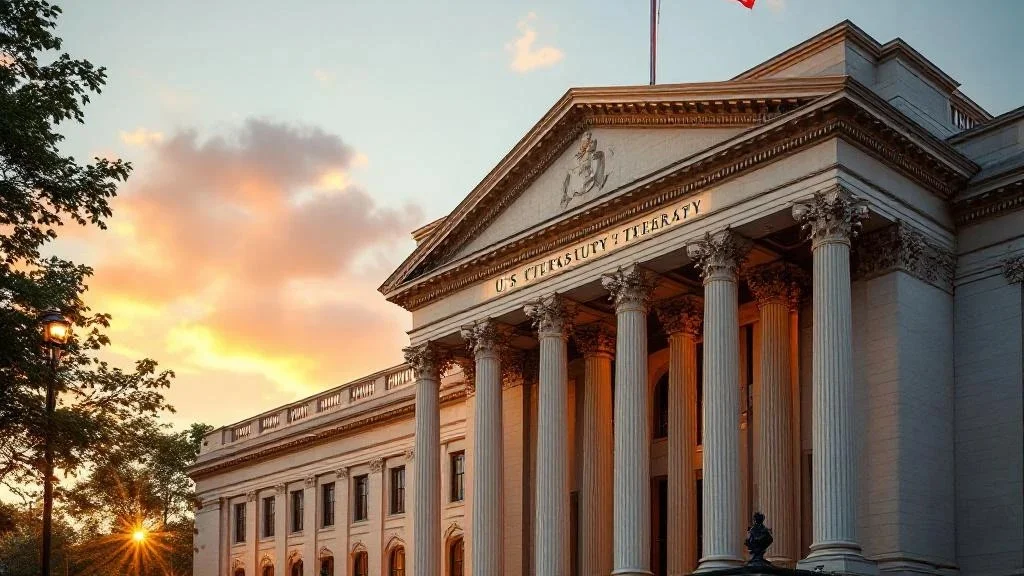 US Treasury bonds are considered the closest thing to a "risk-free" investment that exists. The US government has never defaulted on its debt (the political theater around the debt ceiling doesn't count — they always raise it). When you buy a Treasury bond, you're lending money to the US government, and they pay you interest.
Short-term Treasury yields fluctuate with Fed policy — check current rates on any financial site. Whatever that rate is, it's what banks, hedge funds, and sovereign wealth funds earn on their cash reserves. Until recently, retail investors in emerging markets had almost no way to access it. RWA tokenization changed that.
Ondo USDY
USDY is Ondo Finance's main product. The basic flow:
1. You deposit USDC or USDT on Ondo's platform
2. Ondo pools those deposits and buys short-term US Treasury bonds and bank demand deposits
3. You receive USDY tokens, which accrue yield daily
4. The yield comes from the actual interest earned on the underlying Treasuries
APY fluctuates with Treasury rates — check Ondo's site for current numbers and minimum amounts. Available on multiple chains including Ethereum and Solana. KYC required.
USDY is an accumulating token — its price rises over time rather than your balance changing. If you buy 1,000 USDY at $1.05 today, the price gradually climbs to $1.10, $1.15, and so on as yield accrues. When you sell, you get more USDC back than you deposited. Ondo also offers rUSDY, a rebasing wrapper where the balance grows instead. Most users should stick with USDY — the mechanics are simpler and you don't need to claim anything.
Practical example: A freelance developer in the Philippines earns $3,000/month in USDC. She keeps $1,000 for expenses and deposits $2,000 into Ondo USDY each month. After a year, she's earned yield at US Treasury rates — from Manila, without a US brokerage account. The exact amount depends on what rates are doing that year.
Other tokenized Treasury products exist — Franklin Templeton's BENJI (SEC-registered, but mostly limited to US investors) and BlackRock's BUIDL ($5 million minimum, institutional only). For most readers outside the US, USDY is the practical starting point.
US Treasury bonds are considered the closest thing to a "risk-free" investment that exists. The US government has never defaulted on its debt (the political theater around the debt ceiling doesn't count — they always raise it). When you buy a Treasury bond, you're lending money to the US government, and they pay you interest.
Short-term Treasury yields fluctuate with Fed policy — check current rates on any financial site. Whatever that rate is, it's what banks, hedge funds, and sovereign wealth funds earn on their cash reserves. Until recently, retail investors in emerging markets had almost no way to access it. RWA tokenization changed that.
Ondo USDY
USDY is Ondo Finance's main product. The basic flow:
1. You deposit USDC or USDT on Ondo's platform
2. Ondo pools those deposits and buys short-term US Treasury bonds and bank demand deposits
3. You receive USDY tokens, which accrue yield daily
4. The yield comes from the actual interest earned on the underlying Treasuries
APY fluctuates with Treasury rates — check Ondo's site for current numbers and minimum amounts. Available on multiple chains including Ethereum and Solana. KYC required.
USDY is an accumulating token — its price rises over time rather than your balance changing. If you buy 1,000 USDY at $1.05 today, the price gradually climbs to $1.10, $1.15, and so on as yield accrues. When you sell, you get more USDC back than you deposited. Ondo also offers rUSDY, a rebasing wrapper where the balance grows instead. Most users should stick with USDY — the mechanics are simpler and you don't need to claim anything.
Practical example: A freelance developer in the Philippines earns $3,000/month in USDC. She keeps $1,000 for expenses and deposits $2,000 into Ondo USDY each month. After a year, she's earned yield at US Treasury rates — from Manila, without a US brokerage account. The exact amount depends on what rates are doing that year.
Other tokenized Treasury products exist — Franklin Templeton's BENJI (SEC-registered, but mostly limited to US investors) and BlackRock's BUIDL ($5 million minimum, institutional only). For most readers outside the US, USDY is the practical starting point.Beyond Treasuries: Real Estate and Gold
 Tokenized real estate (RealT, Lofty)
You buy tokens representing fractional ownership of US properties. Tenants pay rent; that rent gets distributed to token holders. RealT focuses on Detroit and Chicago, pays weekly in USDC on Gnosis Chain. Lofty covers Sun Belt states, pays daily on Algorand. Yields and minimums vary by property — check their sites for current listings.
The yields look good on paper, but these are real properties. Vacancy = zero income. Detroit real estate can lose value. Maintenance costs eat into returns. And selling your tokens on thin secondary markets can take days at a discount. This isn't a staking pool.
Tokenized gold (PAXG, XAUT)
Each token = one troy ounce of physical gold in a vault. PAXG is issued by Paxos (NYDFS-regulated, Brink's vaults in London, monthly attestation). XAUT is a Tether subsidiary (Swiss vaults, less transparent). We'd lean PAXG for the better regulation.
Gold doesn't pay yield. You hold it because it tends to hold value when everything else falls apart. If you want income, Treasuries or real estate. If you want a hedge against stablecoin issuers themselves, gold. More in our tokenized gold guide.
Tokenized real estate (RealT, Lofty)
You buy tokens representing fractional ownership of US properties. Tenants pay rent; that rent gets distributed to token holders. RealT focuses on Detroit and Chicago, pays weekly in USDC on Gnosis Chain. Lofty covers Sun Belt states, pays daily on Algorand. Yields and minimums vary by property — check their sites for current listings.
The yields look good on paper, but these are real properties. Vacancy = zero income. Detroit real estate can lose value. Maintenance costs eat into returns. And selling your tokens on thin secondary markets can take days at a discount. This isn't a staking pool.
Tokenized gold (PAXG, XAUT)
Each token = one troy ounce of physical gold in a vault. PAXG is issued by Paxos (NYDFS-regulated, Brink's vaults in London, monthly attestation). XAUT is a Tether subsidiary (Swiss vaults, less transparent). We'd lean PAXG for the better regulation.
Gold doesn't pay yield. You hold it because it tends to hold value when everything else falls apart. If you want income, Treasuries or real estate. If you want a hedge against stablecoin issuers themselves, gold. More in our tokenized gold guide.The Risks
None of this is free money. Know what can kill you before you walk in.
Smart contract risk: Every RWA token is a smart contract. Smart contracts have bugs. Ondo and Paxos have been audited — but an audit is a seatbelt, not a forcefield. One exploit and your "risk-free" Treasury yield turns into a 100% loss.
Regulatory risk: RWA tokens live in a legal gray zone across most of the world. Most tokenized Treasury products aren't SEC-registered securities, which limits how they can be marketed to US residents (Franklin Templeton's BENJI is a notable exception). The EU's MiCA has requirements some issuers may struggle to meet. India slaps 30% tax plus 1% TDS on crypto gains. Your local rules matter — and "I didn't know" has never worked as a defense.
Liquidity risk: This is the one that blindsides people. Selling USDT takes minutes. Selling RealT tokens? Days. Weeks. Maybe at a discount, if the secondary market is thin. Even USDY redemption isn't instant — check Ondo's docs for current processing times. When the market panics, liquidity dries up first. You'll be watching your position burn while the exit door shrinks.
Counterparty risk: You're trusting the issuer to actually hold what they claim. Unknown protocol offering 12% on "tokenized real estate"? Walk away. Stick with names that have track records — Ondo, Paxos, RealT.
Yield isn't fixed: Treasury yields move with the Fed. What looks attractive today could halve in a year. Real estate yields depend on tenants actually paying rent. Past returns mean nothing. The number on the screen when you bought is not a promise.
If you want to try it, USDY on Solana (low gas fees) is the simplest starting point. Platform comparisons are on our RWA page.
This content is for informational purposes only and does not constitute financial advice. Always do your own research before making investment decisions.

Mark Snowden
Former TradFi analyst turned full-time stablecoin researcher. We only recommend platforms we personally use.
Ready to get started?
Check our complete guide to buying stablecoins: real costs, real platforms, no fluff.