
Full Disclosure: We hate BS as much as you do. This site exists to show you how crypto actually works in the real world. To keep the lights on, some links in our articles are affiliate links. If you use them, we may earn a small commission at zero extra cost to you. We only recommend platforms we personally use and trust with our own stablecoins.
The Mars Promise
In 2016, Elon Musk stood on stage at the International Astronautical Congress and laid out the plan: SpaceX would send a Dragon variant to Mars in 2018. A full Starship landing by 2022. Humans walking on Mars by 2024.
It's 2026. None of that happened.
The timeline didn't just slip — it evaporated. In 2020, Musk said he was "highly confident" of a crewed Mars landing by 2026. In 2021, he said he'd be "surprised" if SpaceX hadn't reached Mars within five years. By September 2024, the pitch had softened to "five uncrewed Starships to Mars in the 2026 window, and if those work, maybe humans four years later."
Then on February 8, 2026 — Super Bowl Sunday — Musk posted on X that SpaceX had "shifted priority" from Mars to building a "self-growing city" on the Moon. Mars wasn't cancelled, just "postponed 5-7 years." The reason: the Moon is reachable every 10 days, Mars only every 26 months.
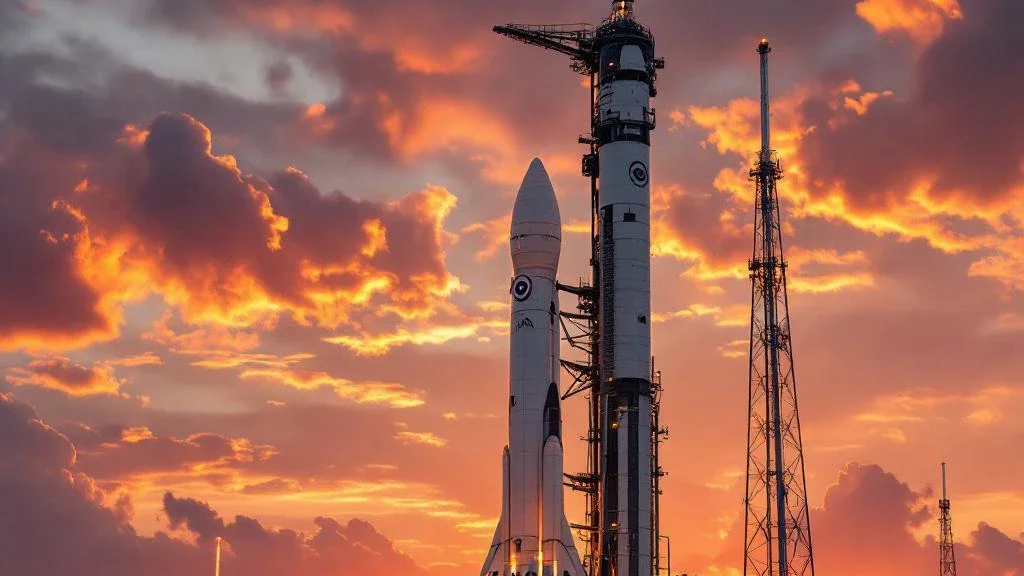 The man who sold an entire generation on "making humanity multi-planetary" quietly pivoted to the Moon because the math didn't work. And somewhere in the background, millions of people are still holding Dogecoin because they believed the Mars dream was real — and that DOGE would somehow be part of it.
The man who sold an entire generation on "making humanity multi-planetary" quietly pivoted to the Moon because the math didn't work. And somewhere in the background, millions of people are still holding Dogecoin because they believed the Mars dream was real — and that DOGE would somehow be part of it.DOGE-1: The Rocket That Never Launched
On May 9, 2021, Musk announced that SpaceX would launch DOGE-1 to the Moon — a 40kg satellite, funded entirely in Dogecoin, carried as a payload on a Falcon 9. The "first crypto-funded space mission." Headlines everywhere. DOGE pumped. The narrative was set: Dogecoin was literally going to the Moon.
The launch was scheduled for 2022.
It didn't launch in 2022. It was pushed to 2023. Then 2025. As of March 2026, DOGE-1 is tentatively scheduled for September 13, 2026 — over four years late. The company behind it, Geometric Energy Corporation, is a one-man operation run by its sole shareholder and director Samuel Reid.
The satellite itself is a 12U CubeSat with sensors, cameras, and — in a detail that perfectly captures the absurdity — a tiny screen designed to display advertisements and images from the Moon's surface and beam them back to Earth. Dogecoin branding in lunar orbit.
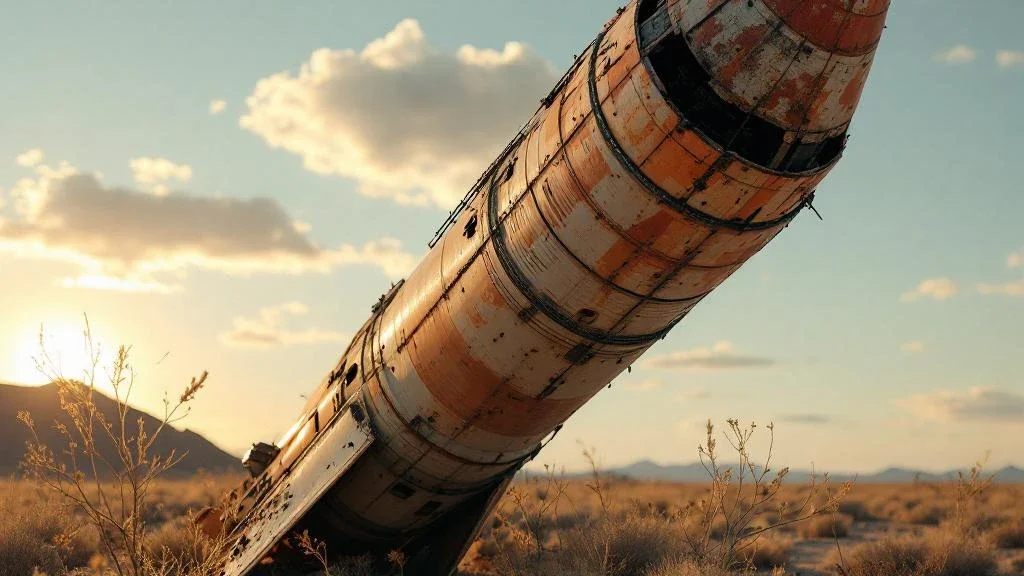 Meanwhile, from the announcement date to today, DOGE has dropped from $0.55 to about $0.10. Anyone who bought on the DOGE-1 announcement and held is down over 80%. The rocket is still on Earth. So is their money.
Meanwhile, from the announcement date to today, DOGE has dropped from $0.55 to about $0.10. Anyone who bought on the DOGE-1 announcement and held is down over 80%. The rocket is still on Earth. So is their money.The Father Who Left and Never Came Back
Dogecoin has two creators. One walked away. The other ran.
Jackson Palmer, the Australian who came up with the idea, left the project around 2015. In July 2021, as DOGE mania was peaking, he published a thread on Twitter that read like a eulogy for the entire industry:
"I am often asked if I will 'return to cryptocurrency.' My answer is a wholehearted 'no.' After years of studying it, I believe that cryptocurrency is an inherently right-wing, hyper-capitalistic technology built primarily to amplify the wealth of its proponents through a combination of tax avoidance, diminished regulatory oversight and artificially enforced scarcity."He called the crypto industry a "cult-like 'get rich quick' funnel designed to extract new money from the financially desperate and naive." Then he went silent. He has never returned. Billy Markus (Shibetoshi Nakamoto) left development in 2014 — less than a year after creating the coin. He still posts on X, mostly memes and sarcastic commentary about crypto markets. He has never returned to active Dogecoin development. The coin's most famous "creator" is essentially a bystander who watches from Twitter while other people lose money on his joke. The two people who created Dogecoin spent a combined total of roughly three hours building it. One thinks the entire industry is a predatory scam. The other tweets memes about it. Neither one is working on making it better. That's the foundation your investment is built on.
SNL Night: The Exact Moment Retail Got Slaughtered
 May 8, 2021. Elon Musk hosts Saturday Night Live. Dogecoin fans call it "The Dogefather" episode. In the days leading up to the show, DOGE surges to its all-time high of $0.7316. Reddit threads are euphoric. People are posting screenshots of five-figure unrealized gains. "DOGE to $1" is trending. Some people have taken out loans.
Then Musk appears in the Weekend Update segment. Colin Jost asks him: "What is Dogecoin?" Musk gives a few answers. Jost pushes back: "So it's a hustle?" Musk pauses, smiles, and says: "Yeah, it's a hustle."
DOGE crashed 35% during the live broadcast. From $0.73 to $0.46 in minutes. The man who pumped the coin to its all-time high called it a hustle on national television, and the people who believed him the most were the ones holding the biggest bags.
It gets worse. The price never recovered. Not in 2022. Not in 2023. Not in 2024. Not in 2025. It's now $0.10. The SNL high was the top — the absolute peak — and millions of people bought in the days before that episode because they trusted Musk. The people who sold during the dip "lost" 35%. The people who held through it lost 86%.
That $0.73 peak wasn't driven by utility, or adoption, or developer activity. It was driven by the anticipation of a comedy show appearance. When the comedian behind the pump called it what it was — a hustle — the market agreed. The only people who didn't get the joke were the ones who'd bet their savings on it.
May 8, 2021. Elon Musk hosts Saturday Night Live. Dogecoin fans call it "The Dogefather" episode. In the days leading up to the show, DOGE surges to its all-time high of $0.7316. Reddit threads are euphoric. People are posting screenshots of five-figure unrealized gains. "DOGE to $1" is trending. Some people have taken out loans.
Then Musk appears in the Weekend Update segment. Colin Jost asks him: "What is Dogecoin?" Musk gives a few answers. Jost pushes back: "So it's a hustle?" Musk pauses, smiles, and says: "Yeah, it's a hustle."
DOGE crashed 35% during the live broadcast. From $0.73 to $0.46 in minutes. The man who pumped the coin to its all-time high called it a hustle on national television, and the people who believed him the most were the ones holding the biggest bags.
It gets worse. The price never recovered. Not in 2022. Not in 2023. Not in 2024. Not in 2025. It's now $0.10. The SNL high was the top — the absolute peak — and millions of people bought in the days before that episode because they trusted Musk. The people who sold during the dip "lost" 35%. The people who held through it lost 86%.
That $0.73 peak wasn't driven by utility, or adoption, or developer activity. It was driven by the anticipation of a comedy show appearance. When the comedian behind the pump called it what it was — a hustle — the market agreed. The only people who didn't get the joke were the ones who'd bet their savings on it.Tesla Accepts DOGE (For T-Shirts, Not Teslas)
In January 2022, Tesla announced it would accept Dogecoin as payment. The headlines were enormous. "Tesla Accepts Dogecoin!" DOGE jumped 14%.
But read the fine print: Tesla accepts DOGE for merchandise only. Belt buckles. Cybertruck-shaped whistles. A "Giga Texas" belt buckle for 835 DOGE. A mini model of the Cybertruck for 300 DOGE. You cannot buy an actual Tesla with Dogecoin.
Think about what that means. The world's most valuable car company, run by Dogecoin's biggest promoter, who has moved the price by hundreds of percent with his tweets — won't accept DOGE for his actual product. He'll take it for a $60 whistle. Not for a $45,000 car.
Tesla briefly accepted Bitcoin for vehicles in early 2021, then stopped, citing environmental concerns. They never extended that option to Dogecoin. The man who calls DOGE "the people's crypto" doesn't trust it enough to sell you a car with it.
If Musk genuinely believed Dogecoin was viable as currency, Tesla's checkout page would accept it. It doesn't. That tells you more than any tweet ever could.
SlumDOGE Millionaire: The Man Who Wouldn't Sell
Glauber Contessoto was a 33-year-old Brazilian immigrant working at a music company in Los Angeles. In February 2021, he put everything he had into Dogecoin — his entire savings, maxed-out credit cards, and $1,500 borrowed from his aunt, who could barely spare it. About $250,000 total, at roughly $0.045 per coin. He got over 5 million DOGE.
By May 2021, his Robinhood screen showed over $3 million. He quit his job. Called himself "SlumDOGE Millionaire." Started a YouTube channel. CNBC featured him in "How I became an overnight dogecoin millionaire". A full documentary was made — This Is Not Financial Advice, streaming on Tubi for free.
People told him to sell at $0.50. He said no. At $0.25, people begged him. He said no — he was waiting for $1. The price never got there.
DOGE crashed. His $3 million became less than $300,000. He lost $167,000 in a single day and posted about it. He didn't sell.
In November 2024, Trump won and DOGE surged. Glauber was briefly a millionaire again at around $2.2 million. He told reporters he'd "sell some this time." He didn't.
Now DOGE is at $0.10. His 5 million coins are worth roughly $500,000 — a fraction of the $3 million he once had. He's still holding. He also bought a large position in PEPE, another meme coin.
The Glauber story is the Dogecoin story in miniature. A real person, with real courage and real conviction, who turned $250,000 into $3 million through nothing but belief — and then watched it evaporate because he couldn't separate the belief from the trade. He had $3 million. He has $500,000. The difference isn't the market. It's the inability to accept that a meme coin hitting $0.73 on SNL night was the exit, not the beginning.
He promised his aunt he'd buy her a house. Five years later, he's still promising.
The Musk Pattern: Every Tweet Has a Business Reason
Musk's Dogecoin tweets aren't random. Line them up against his business calendar and a pattern emerges:
Academic research measured the causal effect: Musk's tweets produce an average 33% spike in DOGE price (95% confidence interval: 23%-42%). He moves the price. The question is who benefits.
 When the SEC hinted at investigating his tweets, Musk responded: "I hope they do! It would be awesome."
When investors filed a $258 billion class action lawsuit alleging market manipulation, the judge dismissed it. The ruling: Musk's claims about Dogecoin were "aspirational and puffery, not factual" — meaning "no reasonable investor could rely upon them."
Read that again. A federal judge ruled that no reasonable person should take Elon Musk's Dogecoin statements seriously. The court's position is that if you bought DOGE because of Musk's tweets, you were being unreasonable.
When the SEC hinted at investigating his tweets, Musk responded: "I hope they do! It would be awesome."
When investors filed a $258 billion class action lawsuit alleging market manipulation, the judge dismissed it. The ruling: Musk's claims about Dogecoin were "aspirational and puffery, not factual" — meaning "no reasonable investor could rely upon them."
Read that again. A federal judge ruled that no reasonable person should take Elon Musk's Dogecoin statements seriously. The court's position is that if you bought DOGE because of Musk's tweets, you were being unreasonable.
| Date | DOGE Action | What Musk Needed | DOGE Move |
|---|---|---|---|
| Apr 2019 | "Dogecoin might be my fav" | Tesla production challenges | +35% |
| Jan 2021 | "Dogecoin is the people's crypto" | Tesla Q4 earnings season | +75% |
| May 2021 | SNL "Dogefather" appearance | Peak public attention needed | -35% after |
| Apr 2022 | "Twitter should accept DOGE" | Bidding $44B for Twitter | Pump |
| Oct 2022 | Completed Twitter acquisition | Needed positive sentiment | +94% in a week |
| Nov 2024 | Named head of D.O.G.E. dept | Political capital with Trump | +20% |
When the SEC hinted at investigating his tweets, Musk responded: "I hope they do! It would be awesome."
When investors filed a $258 billion class action lawsuit alleging market manipulation, the judge dismissed it. The ruling: Musk's claims about Dogecoin were "aspirational and puffery, not factual" — meaning "no reasonable investor could rely upon them."
Read that again. A federal judge ruled that no reasonable person should take Elon Musk's Dogecoin statements seriously. The court's position is that if you bought DOGE because of Musk's tweets, you were being unreasonable.The One Thing Dogecoin Actually Gets Right
I'll give Dogecoin one honest credit: its monetary policy is better designed than Bitcoin's.
Dogecoin inflates at a fixed 5.256 billion coins per year — roughly 10,000 DOGE per block, every minute, forever. That sounds bad until you realize what it actually means: the inflation rate drops every year. In 2026, it's about 3.5%. By 2040, it'll be under 2.5%. By 2050, under 2%.
That's actually closer to how a functional currency should work. A small, predictable, declining inflation rate encourages spending over hoarding. It means new participants can always mine new coins — unlike Bitcoin, where 95% of the supply is already locked up by early adopters. Dogecoin's supply curve looks more like gold's annual mine production than Bitcoin's artificial scarcity.
And it's proof-of-work. Merged mining with Litecoin since 2014, using Scrypt. That means real energy expenditure anchoring the network's value — the same argument we made in favor of Bitcoin's PoW. It's not a proof-of-stake token where validators earn tokens to buy more tokens in a circular loop.
The irony is brutal: Dogecoin's technical design is actually more sound than most serious crypto projects. But none of that matters when 86% of your token's value evaporation is driven by meme cycles and one man's Twitter feed. Good monetary policy can't fix a broken price discovery mechanism.
The Last Hope: X Money. But Where Is Dogecoin?
Every time Musk mentions X Payments, Dogecoin pumps. It happened in 2023. In 2024. And on March 11, 2026, when Musk announced X Money would enter early public access in April — DOGE spiked 15%, then fell back within 24 hours. The pattern is Pavlovian at this point: Musk says "payments," DOGE holders hear "Dogecoin."
But here's what X Money actually is: a pure fiat product. Peer-to-peer dollar transfers. A Visa metal debit card with your X handle engraved on it. Direct deposit. Up to 6% APY on balances. FDIC insured through Cross River Bank. Zero foreign transaction fees. 3% cashback.
It's Venmo with better branding. Not a crypto wallet.
In every official announcement — the Visa partnership, the beta launch, the April public access date — there is zero mention of Dogecoin. Zero mention of cryptocurrency. Zero mention of blockchain. The partner is Visa, not Coinbase. The bank is Cross River, not a crypto custodian. The product competes with CashApp and Venmo, not with crypto wallets.
Bitcoinist asked the question directly: "Where Is Dogecoin In Musk's X Payments Beta?" The answer was silence. X's product lead Nikita Bier explicitly stated that X "is not acting as a brokerage" and will not execute trades on behalf of users. The "Smart Cashtags" feature lets you look at crypto price charts inside X — like checking the weather. You can't buy, sell, or send anything.
Musk has never — not once — officially confirmed that Dogecoin will be integrated into X Payments. He's called DOGE his "favorite cryptocurrency." He's said he has "a soft spot" for it. Tesla accepts it for $60 whistles. But when it came time to build an actual payments product with real money, real regulatory compliance, and real bank partnerships — he chose dollars and Visa.
The DOGE community knows this, even if they won't say it out loud. The official Dogecoin X account responded to the X Money announcement not with celebration, but with a defensive question: "If you run a business, just accept Doge. Why pay a 2-3% fee to a credit card company?" That's not the tone of a community that just got what it wanted. That's the tone of a community watching the last door close.
The People Who Believed
In early 2026, a man named Brandon Titus wrote an open letter to Elon Musk on X. His father, Michael, was 67 years old, five years into a losing fight with liver cancer. The family home had been destroyed in the July 4th floods — Brandon had swum through raging water to pull his father off a roof. Now his father was fading.
Michael Titus had one item on his bucket list: seeing a SpaceX launch in person. He'd been rocket-obsessed his whole life — building model rockets with Brandon as a kid, explaining every launch on TV. When Musk caught the first Starship booster, Michael grinned ear to ear. He'd created an X account for the sole purpose of tracking SpaceX milestones. It was, Brandon wrote, "his brightest light through the cancer battles."
Brandon asked for help making it happen. A launch viewing. Maybe a video message. His father's birthday was coming up on February 6th. "I'm not confident he'll see another one."
The post went viral. Thousands of replies, shares, messages of support. Brandon sat by his father's bed reading every comment aloud. "The tears continued to pour as I read one message after another," he wrote. "This experience alone has created a moment I will never forget."
Musk never responded. Michael Titus passed away.
This isn't a story about Musk owing anyone anything — he doesn't. It's a story about what happens when millions of ordinary people pour genuine belief into someone who is, at the end of the day, optimizing for attention, stock price, and political capital. Michael Titus wasn't holding Dogecoin. But the dynamic is the same: real people, real faith, real consequences — and a one-way relationship with someone who will never look down.
For every Dogecoin holder checking their Robinhood app at 2 AM, there's a version of this story. Not as dramatic. Not as heartbreaking. But the same structure: a person who believed, a promise that was never made to them personally, and a slow realization that the man on the screen doesn't know they exist.
44% of Holders Are Underwater. The Math Doesn't Care About Memes.
As of early 2026, Dogecoin sits at roughly $0.10 — down 86% from its May 2021 all-time high of $0.73. It dropped over 60% in 2025 alone.
About 44% of DOGE holders are currently at a loss. That's roughly 3 million addresses sitting on coins worth less than what they paid.
And the concentration should concern anyone calling this a "people's currency." The single largest wallet — widely believed to be Robinhood's omnibus account — holds 19.45% of all DOGE in existence. The top 10 wallets control 40-60% of the total supply. Whether these are exchanges holding on behalf of millions of users or individuals doesn't change the structural reality: the supply is concentrated in very few hands.
The D.O.G.E. department? It was effectively dissolved by late 2025. Musk claimed $150 billion in government savings. POLITICO verified $1.4 billion — less than 1% of the claim. Government spending actually went up 6% during DOGE's tenure. The department that borrowed a meme coin's name accomplished almost nothing, and the meme coin that lent its name got nothing in return.
Mars became the Moon. The Moon rocket still hasn't launched. The creator called it all a scam. The court said no reasonable person should believe the hype. And 3 million wallets are still holding, still waiting, still dreaming about a Shiba Inu on the surface of a world that Elon Musk isn't even trying to reach anymore.
Stop waiting. The rocket isn't coming. The dog isn't going to Mars. Your $0.73 DOGE is worth a dime and the only person who ever made money off this trade is the billionaire who tweeted about it.
If you want money that actually works — that you can send, spend, and earn yield on today — it looks like a dollar-backed stablecoin. No memes. No rocket emojis. Just a dollar that does what a dollar is supposed to do.
This content is for informational purposes only and does not constitute financial advice. Always do your own research before making investment decisions.

Mark Snowden
Former TradFi analyst turned full-time stablecoin researcher. We only recommend platforms we personally use.
Ready to get started?
Check our complete guide to buying stablecoins: real costs, real platforms, no fluff.