
Full Disclosure: We hate BS as much as you do. This site exists to show you how crypto actually works in the real world. To keep the lights on, some links in our articles are affiliate links. If you use them, we may earn a small commission at zero extra cost to you. We only recommend platforms we personally use and trust with our own stablecoins.
So You Want to Be a Crypto Influencer
 Let's be honest. You've seen the screenshots. A 22-year-old with 50,000 followers posting a Binance PnL card showing +$340,000 in a single trade. "Called it last week in the VIP group." The replies are fire emojis, rocket ships, and "drop the link bro."
You've thought about it. Maybe you even started a Twitter account. Posted a few charts. Got 11 likes.
I'll save you the suspense: the influencers you're watching aren't making money from trading. They're making money from you watching them trade. And most of what you're watching isn't even real.
I didn't leave my apartment last weekend. Two all-nighters staring at Etherscan, scrolling through hundreds of ZachXBT threads, and reading leaked KOL deal sheets that made me want to take a shower. Stop telling yourself it's "just a few bad apples." This entire influencer class is built on five stupidly simple tricks that work every single time. I'm flipping the table today — not to teach you how to scam, but so you stop being fuel for these Lamborghini-driving parasites.
Five ways crypto KOLs make money. Not one of them involves actually being good at trading.
Let's be honest. You've seen the screenshots. A 22-year-old with 50,000 followers posting a Binance PnL card showing +$340,000 in a single trade. "Called it last week in the VIP group." The replies are fire emojis, rocket ships, and "drop the link bro."
You've thought about it. Maybe you even started a Twitter account. Posted a few charts. Got 11 likes.
I'll save you the suspense: the influencers you're watching aren't making money from trading. They're making money from you watching them trade. And most of what you're watching isn't even real.
I didn't leave my apartment last weekend. Two all-nighters staring at Etherscan, scrolling through hundreds of ZachXBT threads, and reading leaked KOL deal sheets that made me want to take a shower. Stop telling yourself it's "just a few bad apples." This entire influencer class is built on five stupidly simple tricks that work every single time. I'm flipping the table today — not to teach you how to scam, but so you stop being fuel for these Lamborghini-driving parasites.
Five ways crypto KOLs make money. Not one of them involves actually being good at trading.Method 1: Get Paid to Say "I'm Bullish" (The KOL Round)
Before a token launches, the project team needs hype. They can buy ads — but ads are expensive and nobody trusts them. Instead, they sell tokens directly to influencers at a steep discount. This is called a "KOL round" — and it's the backbone of crypto marketing in 2026.
The playbook is dead simple:
Step 1: The Deal
A project approaches a KOL and offers to sell them tokens at 50-90% below the planned listing price. The catch: the tokens are locked — they vest over 6 to 18 months. The KOL invests real money, but at a price retail investors will never see.
CoinDesk investigated the KOL economy and found that these deals are standard practice. The terms are almost never disclosed to the KOL's audience. One source described it as: "Win for the protocol, win for the KOL, massive loss for retail."
Step 2: The Shill
Now the KOL has a financial incentive to pump the token for the entire duration of their vesting period. Every tweet saying "this project is undervalued" is literally true — for them. They bought at 10 cents. You're buying at a dollar. Of course they're bullish.
The shilling isn't random. It follows the unlock schedule. More tweets before a cliff unlock. Subtle "I'm accumulating" posts when they need liquidity to sell into. Guest appearances on podcasts, Twitter Spaces, YouTube videos — all timed to vesting milestones.
Step 3: The Silence
This is the tell. One day, the KOL who spent six months screaming about a project simply... stops. No goodbye post. No "I sold my position" disclosure. Just silence. Their tokens finished unlocking. They're out. You're still holding.
Real Case: Movement Labs ($MOVE)
A CoinDesk investigation revealed that a secret market-maker agreement gave control of 66 million MOVE tokens to an opaque intermediary. The result: $38 million in selling pressure hit the market on day one. The KOLs who promoted MOVE during the buildup were part of the demand side of a machine designed to generate exit liquidity.
How to spot it: If a KOL suddenly goes quiet about a token they promoted for months, check the token's unlock schedule on Token Unlocks. If their silence coincides with a cliff unlock — now you know why.
Method 2: Build a "Smart Money" Wallet (The Self-Deal)
 This is the most sophisticated trick, and it's the one that fools even experienced traders.
The Setup
The KOL creates multiple wallets. The "main" wallet is linked to their public identity — connected to their Twitter handle via Arkham, Nansen, or a public on-chain label. This is the one followers track. This is the "smart money" wallet.
The other wallets are anonymous. No labels. No connections. These are the real working accounts.
The Performance
Here's the playbook, step by step:
1. Find a low-liquidity token — ideally a new meme coin on Solana or Base with under $100K in liquidity. The less liquid, the easier to move the price.
2. Use the anonymous wallets to buy a large position. Because liquidity is thin, even $5,000-$10,000 can move the price 50-200%.
3. Use a second set of anonymous wallets to buy small amounts at progressively higher prices. This creates the appearance of organic demand and drives the price up further. Left hand sells to right hand — the volume is real, the trading is fake.
4. Now the public "smart money" wallet buys in. On Arkham or Nansen, this looks like a whale entering a position. Followers see it and FOMO in.
5. The KOL tweets: "Interesting on-chain activity on $TOKEN. Not financial advice." The followers who track the wallet pile in. Price spikes.
6. The anonymous wallets sell into the liquidity created by the followers. The KOL's public wallet may even take a loss — "See, I'm holding too. I'm down with you guys."
The beauty of this trick: the KOL's public wallet genuinely shows a loss. But the anonymous wallets made 10x that loss in profit. The net position is massively profitable. The public image is "I lost money too."
Real Case: Crypto Beast ($ALT)
In July 2025, ZachXBT exposed a KOL called Crypto Beast who operated 45 wallets connected to a single token launch ($ALT). The token went from $0.19 to near-zero in one hour — a 97% crash. Crypto Beast's network of wallets dumped over $11 million. The market cap went from $190 million to $3 million.
ZachXBT traced the 45 wallets back to addresses Crypto Beast had previously shared publicly on Telegram and Twitter. Same person. Dozens of wallets. One coordinated dump.
And this wasn't even his first rodeo. ZachXBT traced the same playbook across a dozen tokens this guy pumped — ALPHA, RICH, YE, ACE, JOHN. But the absolute cherry on top? One of the tokens was literally called $RUG. The name. Was. RUG. These KOLs aren't even bothering to hide it anymore — they're writing the scam on the tin and retail is still lining up to buy. Sometimes I wonder if the people who bought $RUG have some kind of masochistic streak.
Alleged Case: MrBeast
In November 2024, on-chain analysts Lookonchain and researcher Kasper Vandeloock published findings linking approximately 50 wallets to MrBeast (31.2 million followers). The public analysis — based entirely on on-chain data — alleged that these wallets bought tokens in projects MrBeast publicly endorsed, before the endorsements drove prices up.
The alleged profits identified in the analysis:
This is the most sophisticated trick, and it's the one that fools even experienced traders.
The Setup
The KOL creates multiple wallets. The "main" wallet is linked to their public identity — connected to their Twitter handle via Arkham, Nansen, or a public on-chain label. This is the one followers track. This is the "smart money" wallet.
The other wallets are anonymous. No labels. No connections. These are the real working accounts.
The Performance
Here's the playbook, step by step:
1. Find a low-liquidity token — ideally a new meme coin on Solana or Base with under $100K in liquidity. The less liquid, the easier to move the price.
2. Use the anonymous wallets to buy a large position. Because liquidity is thin, even $5,000-$10,000 can move the price 50-200%.
3. Use a second set of anonymous wallets to buy small amounts at progressively higher prices. This creates the appearance of organic demand and drives the price up further. Left hand sells to right hand — the volume is real, the trading is fake.
4. Now the public "smart money" wallet buys in. On Arkham or Nansen, this looks like a whale entering a position. Followers see it and FOMO in.
5. The KOL tweets: "Interesting on-chain activity on $TOKEN. Not financial advice." The followers who track the wallet pile in. Price spikes.
6. The anonymous wallets sell into the liquidity created by the followers. The KOL's public wallet may even take a loss — "See, I'm holding too. I'm down with you guys."
The beauty of this trick: the KOL's public wallet genuinely shows a loss. But the anonymous wallets made 10x that loss in profit. The net position is massively profitable. The public image is "I lost money too."
Real Case: Crypto Beast ($ALT)
In July 2025, ZachXBT exposed a KOL called Crypto Beast who operated 45 wallets connected to a single token launch ($ALT). The token went from $0.19 to near-zero in one hour — a 97% crash. Crypto Beast's network of wallets dumped over $11 million. The market cap went from $190 million to $3 million.
ZachXBT traced the 45 wallets back to addresses Crypto Beast had previously shared publicly on Telegram and Twitter. Same person. Dozens of wallets. One coordinated dump.
And this wasn't even his first rodeo. ZachXBT traced the same playbook across a dozen tokens this guy pumped — ALPHA, RICH, YE, ACE, JOHN. But the absolute cherry on top? One of the tokens was literally called $RUG. The name. Was. RUG. These KOLs aren't even bothering to hide it anymore — they're writing the scam on the tin and retail is still lining up to buy. Sometimes I wonder if the people who bought $RUG have some kind of masochistic streak.
Alleged Case: MrBeast
In November 2024, on-chain analysts Lookonchain and researcher Kasper Vandeloock published findings linking approximately 50 wallets to MrBeast (31.2 million followers). The public analysis — based entirely on on-chain data — alleged that these wallets bought tokens in projects MrBeast publicly endorsed, before the endorsements drove prices up.
The alleged profits identified in the analysis:
- SuperVerse ($SUPER): $11.45 million (100x on $100K)
- Ethernity Chain ($ERN): $4.65 million
- Polkamon ($PMON): $1.72 million
- Total identified: over $23 million
Method 3: Never Lose a Trade — On Camera (The Hedge Trick)
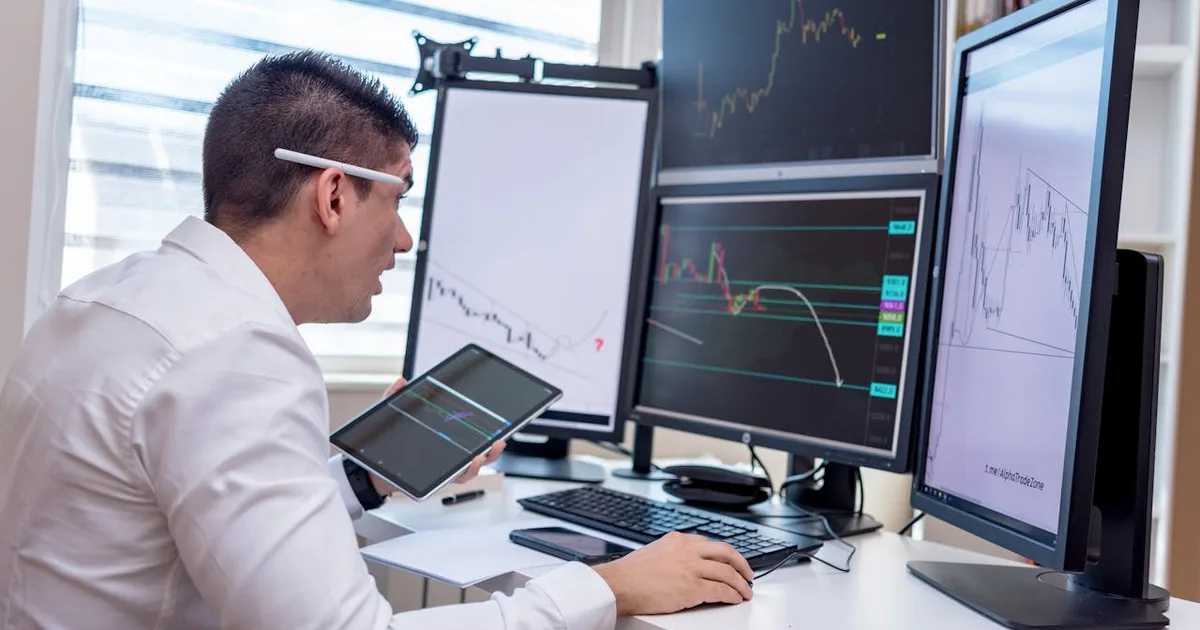 This one is simple, elegant, and almost impossible to catch unless you know to look for it.
How It Works
The KOL opens two accounts on the same exchange — or two accounts on two different exchanges. On one account, they go long Bitcoin. On the other, they go short Bitcoin. Same size. Same entry time.
Bitcoin moves. It always does.
One account shows a massive profit. The other shows a massive loss. The KOL screenshots the winning account. Posts it. "Called this move perfectly. Link to VIP group in bio."
The losing account? Deleted. Hidden. Never mentioned. If the exchange lets you display your positions publicly (and many now do — Binance, Bybit, and OKX all have "copy trading" leaderboards), the KOL only links the winning account to their public profile.
The Variations
Variation 1: Selective screenshot. No need for two exchanges. Just open a long and a short on separate sub-accounts. Screenshot the winner. This costs the spread and funding rate on the losing side — a small price for a screenshot worth thousands in VIP group subscriptions.
Variation 2: The close-and-reopen. Open a large position. If it goes against you, close it at a small loss and immediately re-enter. Repeat until you catch a winning move. Screenshot the winning trade. Your overall PnL is negative, but the screenshot shows a single trade with +200%.
Variation 3: The demo account. Some exchanges offer paper trading accounts that display the same interface as real accounts. Trade with fake money. Screenshot real-looking profits. No one can tell the difference from a screenshot.
The Copy Trading Leaderboard Problem
Exchanges like Binance and Bybit now feature "copy trading" where followers can automatically mirror a trader's positions. The leaderboards show win rate, PnL, and follower count. This looks legitimate — it's on the exchange itself, not a random Telegram group.
But the same trick applies: the trader only connects their winning account to the leaderboard. The losing accounts are disconnected. The displayed performance is real — it's just not the whole picture. You're seeing the survivor, not the graveyard.
How to spot it: Look at the trader's history on the leaderboard. If they only have a few months of history, or if there are suspicious gaps (no trades for weeks, then suddenly back with a winning streak), they may have reset or switched accounts. No one wins 85%+ of leveraged trades over a sustained period. Not even the best quant funds in the world sustain that.
This one is simple, elegant, and almost impossible to catch unless you know to look for it.
How It Works
The KOL opens two accounts on the same exchange — or two accounts on two different exchanges. On one account, they go long Bitcoin. On the other, they go short Bitcoin. Same size. Same entry time.
Bitcoin moves. It always does.
One account shows a massive profit. The other shows a massive loss. The KOL screenshots the winning account. Posts it. "Called this move perfectly. Link to VIP group in bio."
The losing account? Deleted. Hidden. Never mentioned. If the exchange lets you display your positions publicly (and many now do — Binance, Bybit, and OKX all have "copy trading" leaderboards), the KOL only links the winning account to their public profile.
The Variations
Variation 1: Selective screenshot. No need for two exchanges. Just open a long and a short on separate sub-accounts. Screenshot the winner. This costs the spread and funding rate on the losing side — a small price for a screenshot worth thousands in VIP group subscriptions.
Variation 2: The close-and-reopen. Open a large position. If it goes against you, close it at a small loss and immediately re-enter. Repeat until you catch a winning move. Screenshot the winning trade. Your overall PnL is negative, but the screenshot shows a single trade with +200%.
Variation 3: The demo account. Some exchanges offer paper trading accounts that display the same interface as real accounts. Trade with fake money. Screenshot real-looking profits. No one can tell the difference from a screenshot.
The Copy Trading Leaderboard Problem
Exchanges like Binance and Bybit now feature "copy trading" where followers can automatically mirror a trader's positions. The leaderboards show win rate, PnL, and follower count. This looks legitimate — it's on the exchange itself, not a random Telegram group.
But the same trick applies: the trader only connects their winning account to the leaderboard. The losing accounts are disconnected. The displayed performance is real — it's just not the whole picture. You're seeing the survivor, not the graveyard.
How to spot it: Look at the trader's history on the leaderboard. If they only have a few months of history, or if there are suspicious gaps (no trades for weeks, then suddenly back with a winning streak), they may have reset or switched accounts. No one wins 85%+ of leveraged trades over a sustained period. Not even the best quant funds in the world sustain that.Method 4: Launch a VIP Signal Group (The Front-Run)
This is the oldest trick in the crypto influencer playbook, and it's still the most profitable.
The Pitch
"My free content already made you money. Imagine what the VIP group gets." The subscription costs $200-$2,000 per month. Sometimes it's a one-time payment in crypto (untraceable, of course). The KOL promises "alpha calls," "early entries," and "institutional-grade analysis."
What Actually Happens
1. The KOL identifies a target token — usually a mid-cap altcoin with enough liquidity to enter and exit a large position, but not so liquid that their impact is invisible.
2. The KOL buys their position. This happens hours or days before the "signal" is sent to the VIP group.
3. The signal goes out: "BUY $TOKEN at $X. Target: 2-3x. Stop loss: $Y."
4. The VIP group members buy. The combined buying pressure pushes the price up.
5. The KOL sells into the demand created by their own followers.
The VIP group members are the exit liquidity. They're paying a subscription fee for the privilege of being front-run.
The Numbers
In September 2024, ZachXBT published a spreadsheet containing over 200 crypto KOLs, their Twitter handles, per-tweet promotion prices, and Solana wallet addresses with on-chain payment receipts. The prices ranged from $50 to $60,000 per tweet. Out of 160+ KOLs who accepted paid promotions, fewer than 5 disclosed it as advertising.
This means the "alpha call" in your VIP group might not be the KOL's own conviction. It might be a paid promotion by a project team — and the KOL is being paid twice: once by the project for the tweet, and once by you for the VIP subscription.
Real Case: $HAWK (Hawk Tuah)
In December 2024, viral internet personality Hailey Welch launched the $HAWK token. On-chain analysis by TRM Labs and Bubblemaps revealed:
- Only 3-4% of the token supply was available to the public. 96% was held by 10 insider wallets.
- One wallet bought 17.5% of the total supply within seconds of launch (investing ~$993,000) and profited $1.3 million in 90 minutes.
- Bubblemaps showed connected wallets controlling ~80% of the supply.
- Leaked chat logs from a whistleblower confirmed the operation was premeditated.
Method 5: When All Else Fails, Photoshop (The Fake Screenshot)
We saved the dumbest one for last. And somehow, it still works.
The Basics
The KOL opens their exchange app, edits the HTML using browser developer tools (right-click → Inspect Element), changes the PnL number from -$12,000 to +$340,000, and takes a screenshot. Total time: 45 seconds. Total skill required: none.
Variations include:
- HTML editing: Change any number on any exchange website in real-time using browser dev tools. The page looks identical to a real one.
- Photoshop/image editing: Crop, color-match, and paste different numbers onto a real exchange screenshot. Harder to detect than HTML edits.
- Screen recording of demo accounts: Paper trading interfaces look identical to real ones. Record a "trade" on a demo account, post it as if it were real.
- Shared screenshots from third parties: "My VIP member just sent me this." The screenshot might be real — but it's cherry-picked from 500 members, and the 490 who lost money didn't send screenshots.
- Check the pixel alignment. Edited numbers often have slightly different font rendering, spacing, or anti-aliasing than the surrounding interface.
- Look for impossible timestamps. A screenshot showing a $500K trade on a token that had $50K in daily volume is physically impossible.
- Ask for a screen recording. Not a screenshot — a video. Showing the refresh of the page, scrolling through history, opening the trade details. Fakers almost never provide this because dev-tool edits disappear on page refresh.
- Check the exchange leaderboard. If the KOL claims huge profits but isn't on any copy-trading leaderboard, ask why. If they're too good to prove it publicly, they're probably not that good.
Why Crypto Evolved This Way (It's Not an Accident)
You might read all of this and think: "These are just bad actors. The industry will clean itself up."
It won't. And deep down you already know why.
1. Token creation costs nothing
On Solana, you can launch a new token in under a minute using Pump.fun. The cost is negligible. This means the supply of tokens available for pump-and-dump schemes is essentially infinite. If one token gets exposed, launch another one tomorrow under a different name.
In 2024, Solana-based rug pulls cost investors approximately $500 million. On Raydium alone, about 93% of audited liquidity pools showed characteristics of soft rug pulls, according to Solidus Labs.
2. "Not financial advice" is a legal shield
Every KOL ends their tweets with "NFA" or "DYOR" — not financial advice, do your own research. This is treated as a legal disclaimer that absolves them of responsibility. In practice, it's meaningless. The follower doesn't do their own research. They copy the trade. The KOL knows this. The disclaimer exists to protect the KOL, not the follower.
3. Social media algorithms reward extremes
"I made $340K in one trade" gets 10,000 retweets. "I think this token might go up 15% based on technical analysis" gets 3 likes. The algorithm optimizes for engagement, not accuracy. This means the loudest, most extreme, most unrealistic claims get the most visibility — which is why every crypto influencer's feed looks like a highlight reel of impossible wins.
4. Enforcement exists — but it's selective, slow, and wildly outpaced
The SEC has gone after celebrity crypto promoters — Kim Kardashian paid $1.26 million for an undisclosed EthereumMax promotion, Paul Pierce settled for $1.4 million, and Justin Sun was charged with market manipulation. John McAfee was indicted for touting ICOs. So enforcement isn't zero.
But compare the scale: ZachXBT found 200+ KOLs accepting undisclosed paid promotions in a single spreadsheet. Fewer than 5 disclosed it. The legal consequence for the vast majority was nothing. The SEC picks off a handful of celebrity names per year while thousands of mid-tier KOLs operate the same playbook untouched.
The FTX collapse revealed that the exchange had an official KOL program paying influencers millions. Kevin O'Leary received $18 million. Larry David received $13 million for a Super Bowl ad. After FTX collapsed and billions were lost, some influencers faced lawsuits — but the total penalties have been a fraction of what they earned.
5. The audience replaces itself
Every bull market brings a new generation of investors who have never been scammed before. The KOLs who burned their audience in 2021 rebrand and return in 2024 with the same playbook. The people they scammed have left crypto. The new arrivals have no memory of what happened.
This is why crypto looks the way it does. It's not a bug. It's the logical endpoint of an unregulated market where creating tokens costs nothing, promoting them costs nothing, and the legal consequences are nothing. The KOL economy isn't a corruption of crypto — it's crypto working exactly as designed.
How to Protect Yourself (Or Just Use Stablecoins)
I know the deal. Even after reading all of this, 80% of you will still open up some 22-year-old's profile picture — a Bored Ape, naturally — and fantasize about copying his trades to Lambo-land. Human gambling instincts are incurable. But if you insist on being someone's ATM, at least buy yourself a lesson first:
Check the wallet, not the tweet
Here's the exact process:
1. Go to Arkham Intelligence (free account). Search the KOL's known wallet address or their Twitter handle — Arkham labels many influencer wallets automatically.
2. Look at the "Portfolio" tab. Check what tokens they hold right now. If they're tweeting about a token they don't hold (or already sold), the tweet is an ad, not a conviction.
3. Click into the "Transactions" history. Find the token they're promoting. When did they buy? If the purchase timestamp is hours or days before their tweet, they front-ran their own audience.
4. Check the "Connected Entities" section. Arkham maps wallet clusters. If the KOL's address connects to 10+ other wallets that all bought the same token, you're looking at a coordinated operation.
5. Cross-reference with Etherscan or Solscan for raw transaction data. Look at the token's holder distribution — if 5-10 wallets hold 80%+ of supply, it's a controlled game.
If the data doesn't match the narrative, the narrative is a lie.
Check the unlock schedule
If a KOL is promoting a token, check the token's vesting schedule on Token Unlocks. If there's a large unlock coming in the next 1-3 months, the KOL's enthusiasm might have an expiration date that matches.
Ignore win rates
Any KOL showing an 80%+ win rate is either lying, self-dealing, or selectively showing their best account. The best hedge funds in the world have win rates around 55-60%. If a 22-year-old on Twitter is outperforming Renaissance Technologies, something is wrong.
Never join a paid signal group
If the KOL could consistently pick winners, they wouldn't need your $500/month subscription. The signal group exists because your combined buying pressure is worth more than the subscription fee. You are the product.
Ask one question
Before following any crypto influencer's trade, ask yourself: "If this person could really make money this easily, why would they tell me?"
The answer is always the same: because telling you is how they make money.
Or: Step Off the Treadmill
Everything we've described in this article — the KOL rounds, the fake wallets, the hedged screenshots, the signal groups, the P'd images — exists because crypto is a speculation machine. The product is volatility. The customer is you.
Want to gamble? Go to Vegas. At least the casino comps you a free whiskey when you lose. In crypto, these KOLs just turn you into a line item on their PnL screenshot.
Stop playing their game. 1 USDT = 1 USD. No KOL gets USDT at a discount to dump on you. No VIP group has a "stablecoin alpha call." That's exactly why we built this site — to teach you to use crypto as a tool, not scratch it like a lottery ticket. Buy gift cards, book hotels, earn real yields, spend the money on yourself. Let the KOLs eat each other.
This content is for informational purposes only and does not constitute financial advice. Always do your own research before making investment decisions.

Mark Snowden
Former TradFi analyst turned full-time stablecoin researcher. We only recommend platforms we personally use.
Ready to get started?
Check our complete guide to buying stablecoins: real costs, real platforms, no fluff.